


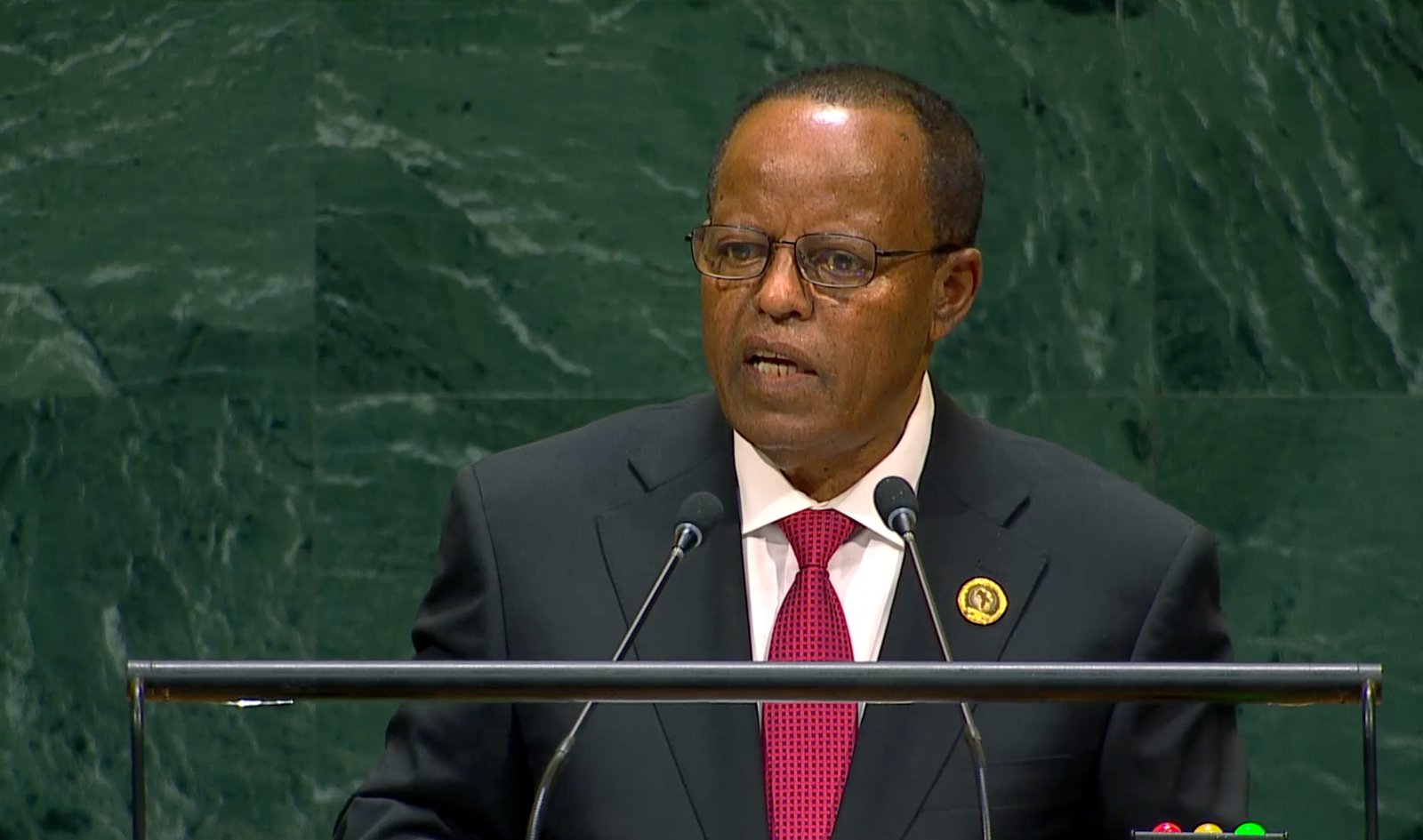
Taye Atske Selassie Amde, President of Ethiopia, recalled that his country bears both the scars of historical betrayal and the unyielding conviction of a survivor.
“When the League of Nations abandoned our appeal against fascist aggression in the 1930s, we didn’t surrender to despair and desolation,” he said, calling upon the community of nations to actively reinforce the very ideals that help prevent global conflict and the scourge of war.
“The United Nations has achieved remarkable victories against extreme poverty, but it has never been enough,” he stressed, citing poverty and systemic inequality fuelling ecological and environmental crisis.
He warned that excessive consumption by the few drives the emissions that are currently choking the planet. “Yet, delayed promises add a brutal toll in the loss of lives and devastation of infrastructure,” he said.
Ethiopia will host COP-32 in November 2027 and will help organize a vibrant and inclusive platform to pioneer tangible solutions for climate action.
He emphasized that Africa is compelled to ask a very defining question: “Will the age of AI become another instrument of global inequality or will it be a catalyst for our collective growth?”
He urged the world to ensure that the Global South leads this technological revolution rather than remains a helpless spectator. The UN reform must reflect the highest aspirations to witness an organization anchored in true equality and justice, he said.
He underscored: “Africa has waited far too long in the shadows of global decision-making. Now, it is demanding immediate justice through the comprehensive reform of the United Nations Security Council.”
“We have transitioned from a wheat importer to one of the largest wheat producers in Africa,” he observed, adding that Africa can feed itself.
“The Grand Ethiopian Renaissance Dam stands as a monumental Pan-African clean energy project, providing that our shared waters can generate progress and shared development for collective regional prosperity,” he stated.